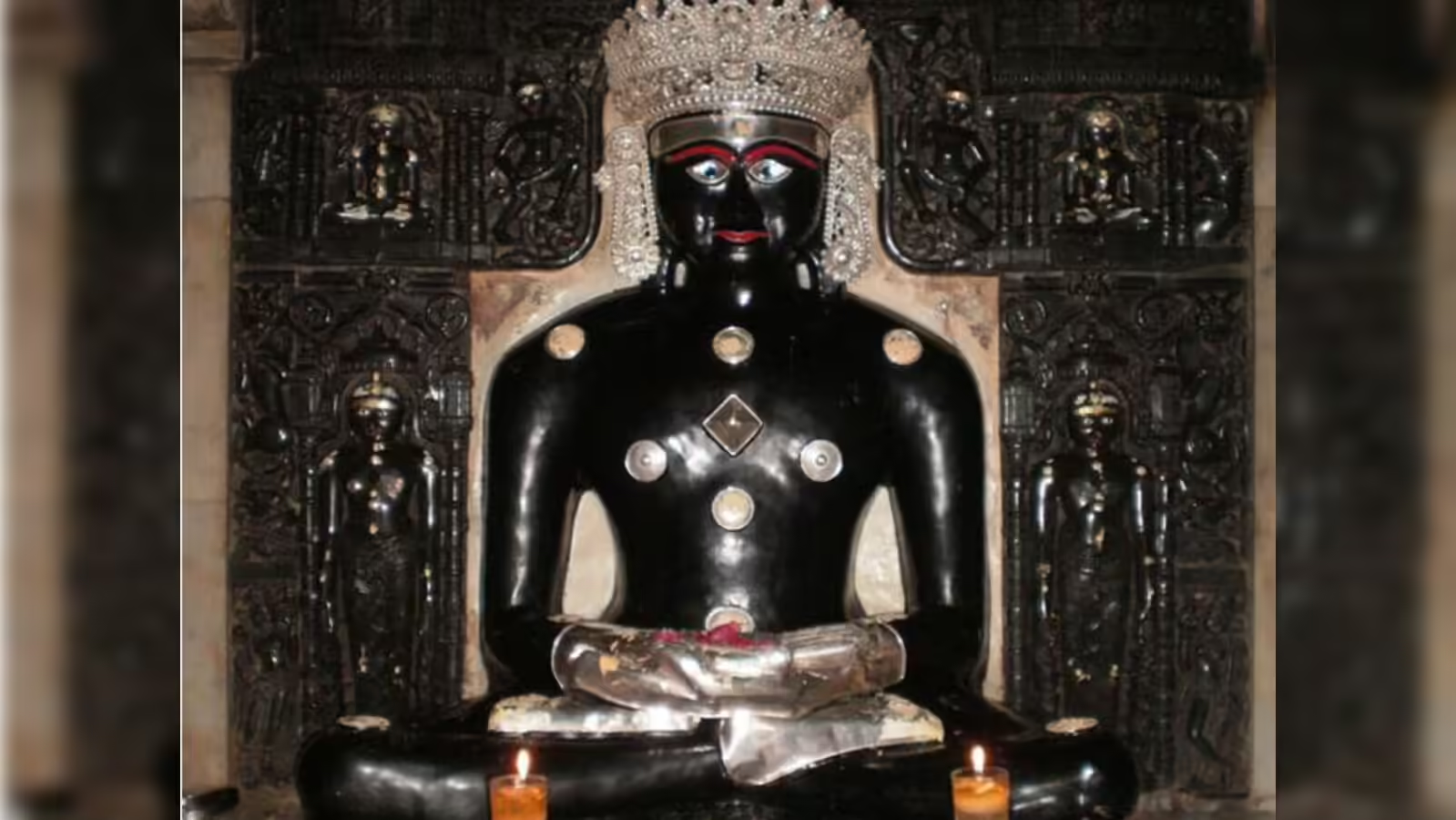
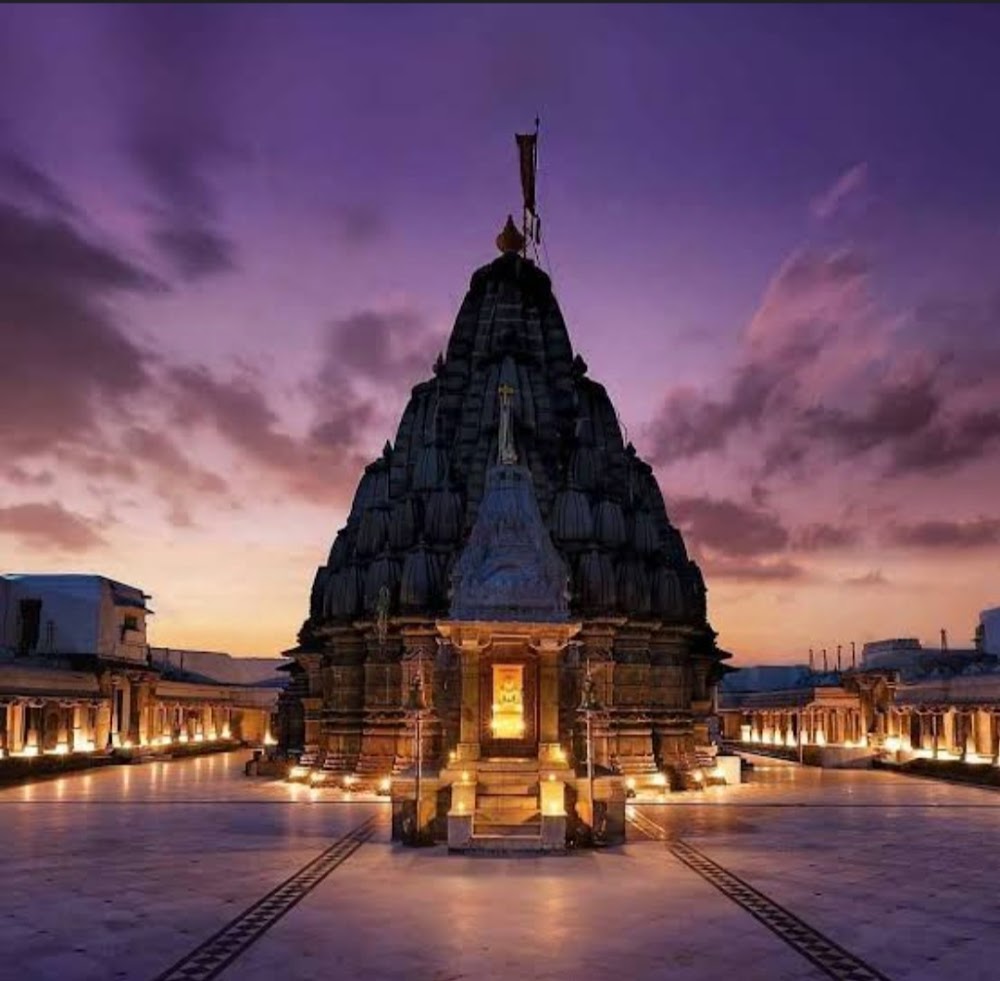
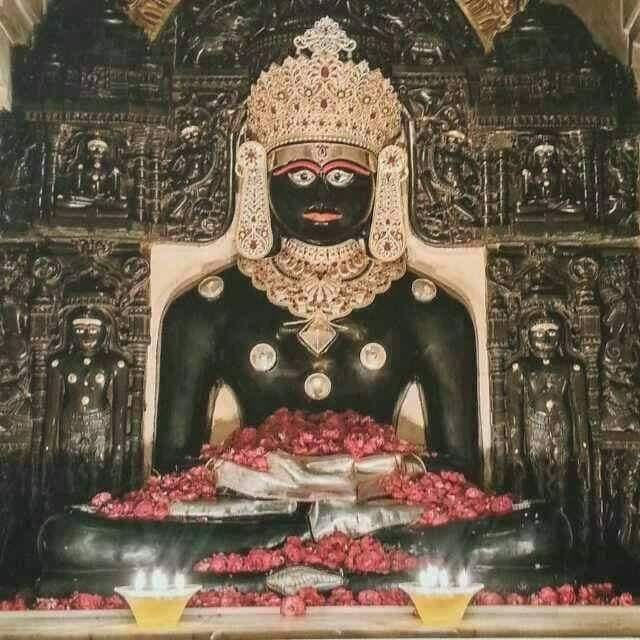
A kinship unlike any other in Indic memory — where the world's most celebrated king and the silent renunciate of Mount Girnar shared the same lineage, the same cradle of childhood, the same age.
Krishna of the Bhagavad Gita and Neminath of the Jain Agamas are not figures from distant centuries spoken into a single myth. According to Jain tradition they were contemporaries, kinsmen, and intimates — born into the same illustrious Yadu dynasty, raised in adjacent palaces, walking the same political stage at one of the most turbulent moments in ancient Indian memory.
Two brothers, princes of the Yadu line. King Samudravijaya, the elder, ruled in Sauripura. Vasudeva, the younger, became the father of Krishna and Balarama through his wives Devaki and Rohini.
The brothers shared everything kings share — kingdom, court, counsel — and in time, the unparalleled honour of raising a Tirthankara and a divine king under the same lineage.
From Samudravijaya and Shivadevi came Neminath — the future 22nd Tirthankara. From Vasudeva came Krishna, who would later be celebrated as the eighth Vasudeva of Jain tradition, and Balarama, the ninth Baladeva, his elder brother.
The three cousins grew up amid wrestling courtyards, royal tutors and the great political dramas of Mathura and Dwarka. Krishna and Balarama walked the way of kings and warriors. Neminath, alone among them, walked inward.
This is the same broad era remembered in the Mahabharata and the Bhagavata traditions — though the Jain narrative emphasises different episodes and different protagonists. In Jain memory, Neminath stands at the moral centre of the age, and Krishna becomes one of his most celebrated devotees.
A celebrated Jain narrative recounts a friendly contest at Krishna's armoury. The young Neminath visited his cousin's palace at Dwarka, and a playful test of strength followed. Krishna's celestial conch Panchajanya was offered for any prince to lift.
Neminath, smiling, raised it as effortlessly as one lifts a flower — and sounded a single note that shook the chambers. The court fell silent. Krishna himself recognised in that moment that this cousin was no ordinary kshatriya.
The story is a hinge: it foretells Neminath's exceptional spiritual destiny, and it casts Krishna in the rare role of witness to a power greater than kingship.
The Krishna–Neminath story is, at its deepest level, a meditation on two legitimate dharmas — the path of righteous engagement and the path of complete withdrawal — and on the rare grace of holding both with respect.
Engagement, governance, the protection of dharma in the public sphere. The Bhagavad Gita's call to selfless action through duty. A spirituality lived inside the world.
Withdrawal, monastic discipline, the silent burning off of karma in the forests of Mount Raivataka. A spirituality lived beyond the world's claims entirely.
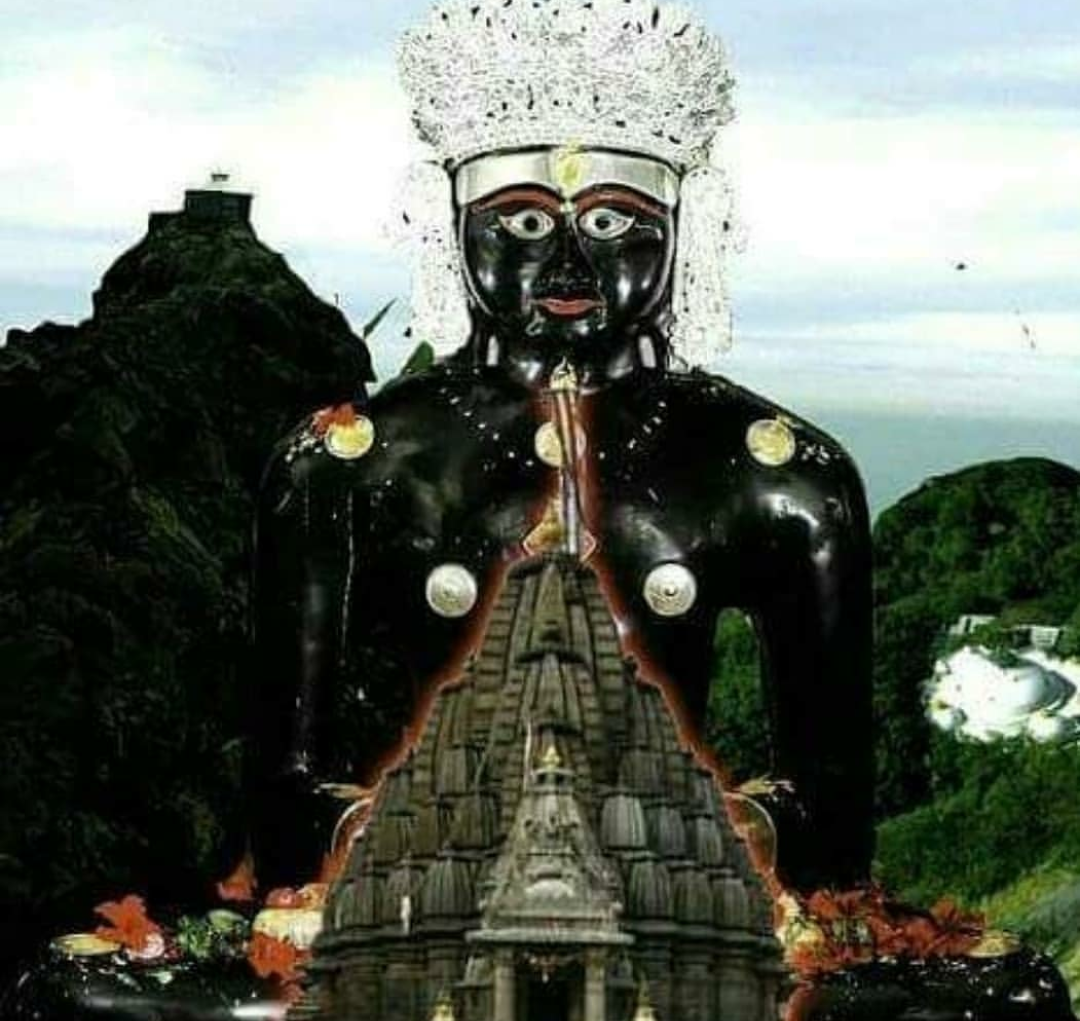
Jain narratives preserve a striking detail: Krishna himself is said to have sought Neminath's blessing at Mount Girnar, and to have been counted among his most ardent devotees — the king bowing to the renunciate without resentment, without pretence.
The throne and the forest are two ways of carrying the same vow. One protects the world by acting wisely within it. The other purifies the world by withdrawing from it utterly.— Reflection on the Krishna-Neminath kinship
The kinship between Neminath and Krishna does cultural work that no other Tirthankaric narrative attempts.
The story affirms that Jain and broader Indic narratives describe overlapping worlds — the same dynasties, the same historical horizon, the same moral concerns.
Neminath's princely birth — directly comparable with Krishna's — places renunciation not below kingship but as a still higher dharma open even to the highest born.
That both figures are associated with the conch — Krishna's Panchajanya, Neminath's lanchhan — reveals a shared symbolic language across two traditions.
The kinship demonstrates that engagement and renunciation are not opposing values but complementary expressions of dharma — each appropriate to a different soul and station.
The geographical footprint of the Yadu dynasty maps onto sites still pilgrim-celebrated today. Sauripura (modern Bateshwar near Agra) holds Neminath's birth tradition. Mathura, Krishna's birthplace, lies barely a day's chariot away. Dwarka, on Saurashtra's coast, became Krishna's western kingdom — and Mount Girnar, just inland, became Neminath's eternal abode.
Two cousins, two cities, two destinies — held together by a stretch of country that today still pulses with both Krishna's flute and the silent footstep of the Tirthankara.
Modern Relevance →
— Mount Girnar