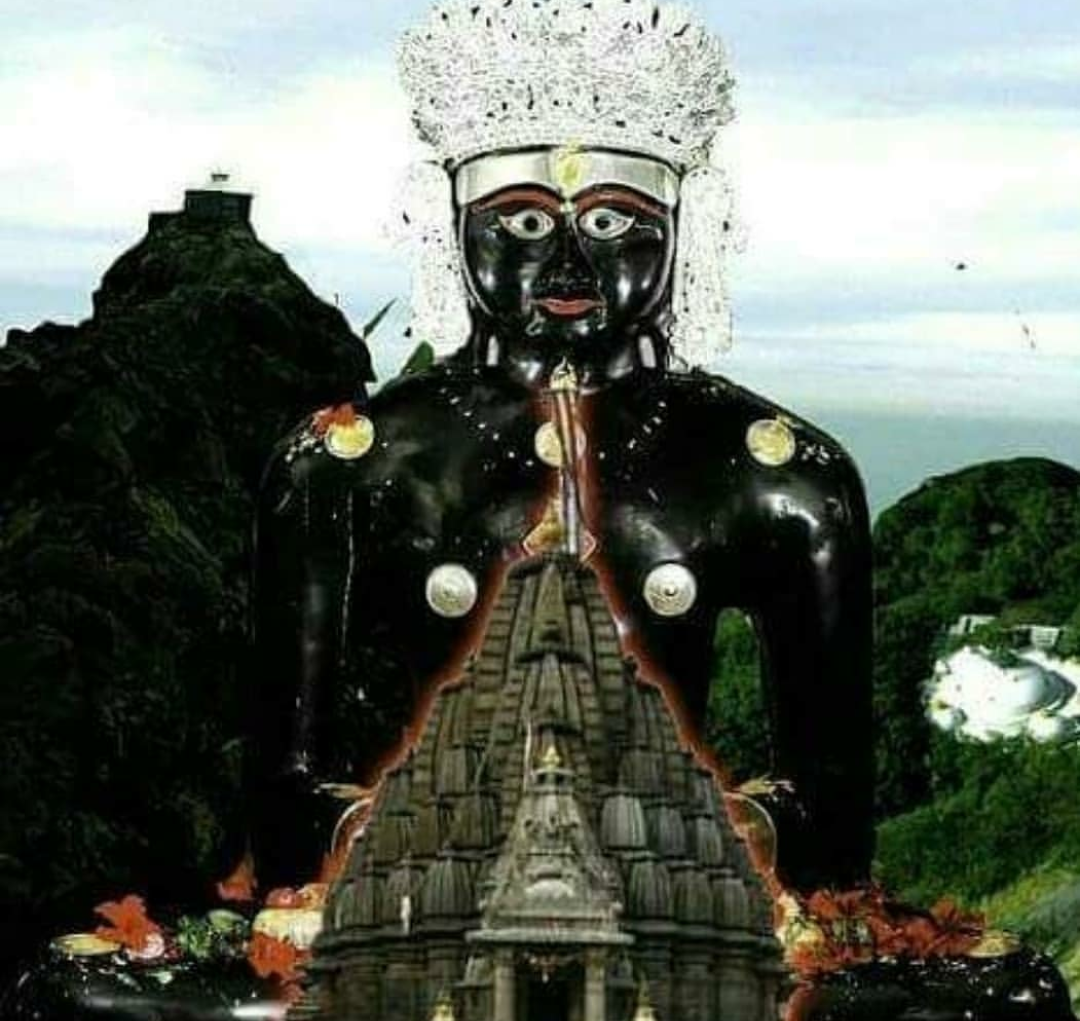
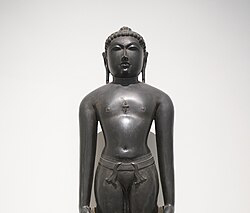
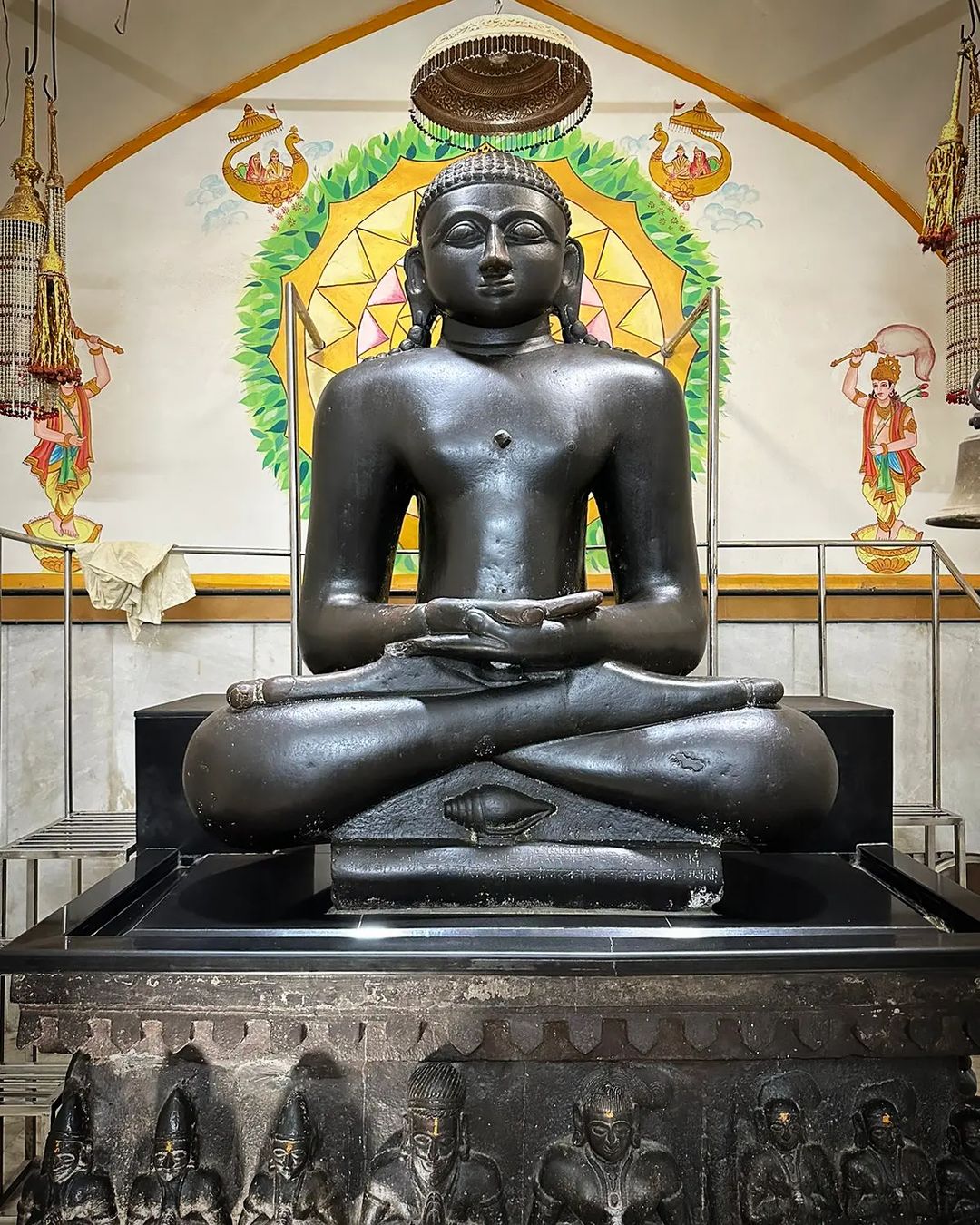
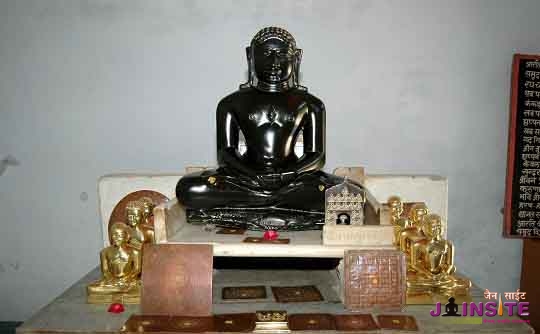
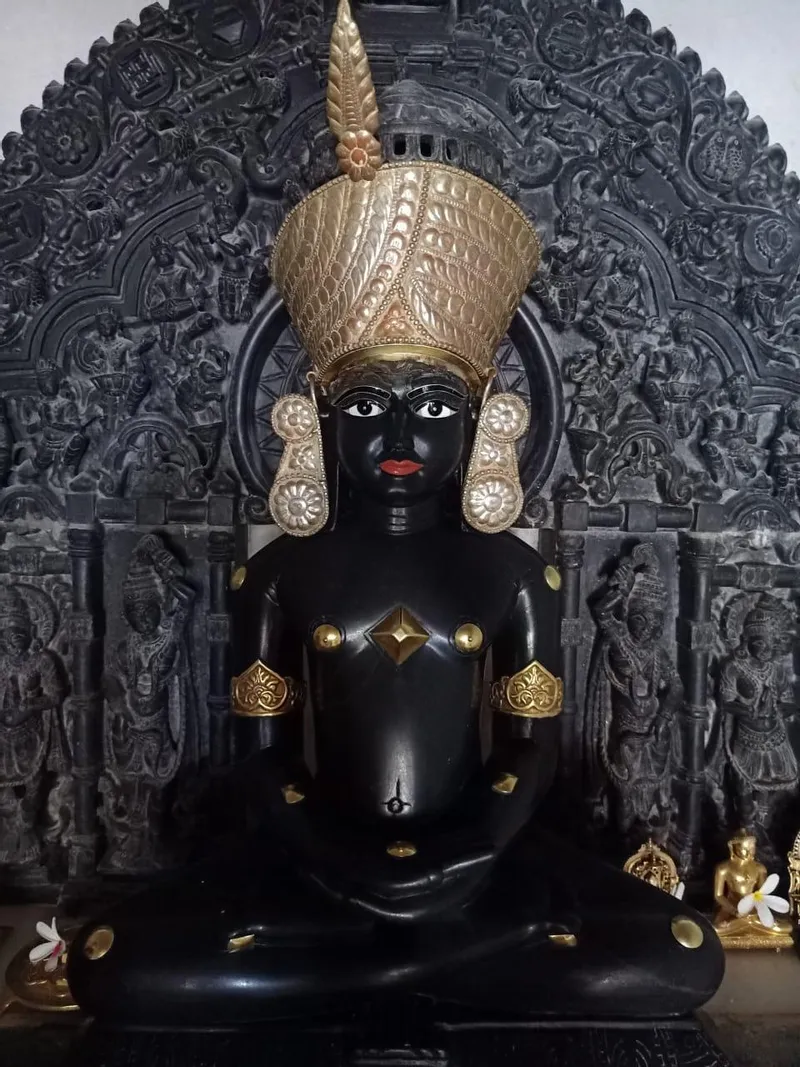
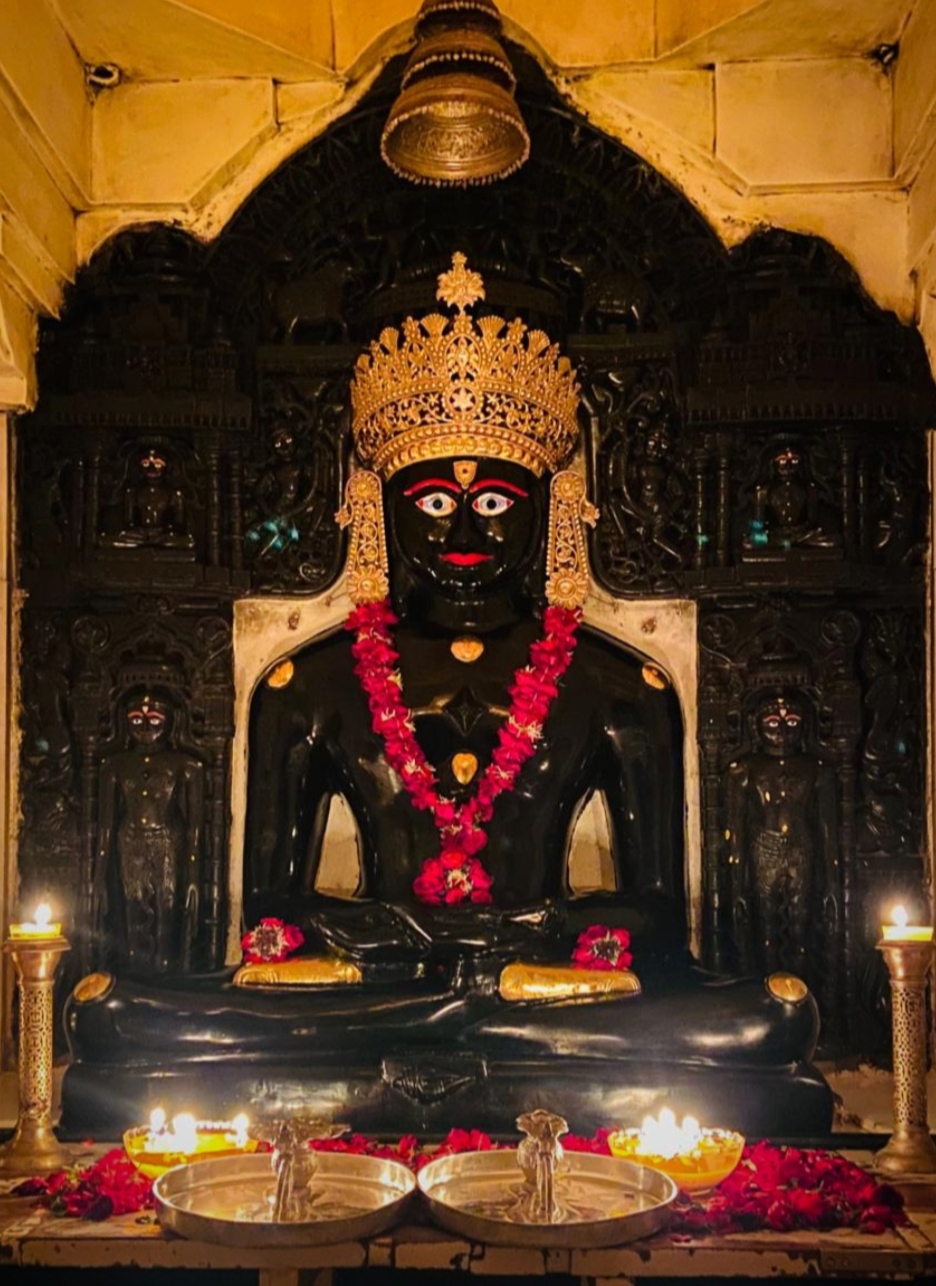
Neminath Bhagwan idol on Mount Girnar against vast skies — the 22nd Tirthankara of Jainism
22nd Tirthankara · Arishtanemi

The Path of Compassion & Renunciation.

A timeless tribute to Neminath Bhagwan — prince of the Yadu dynasty, cousin of Krishna, and the awakened soul who turned away from a royal wedding to embrace ahimsa as the supreme law.

N · 22 / 24 · Avasarpini

Scroll

22ndTirthankara
YaduRoyal Dynasty
KrishnaCousin & Kinsman
AhimsaSymbol of Compassion
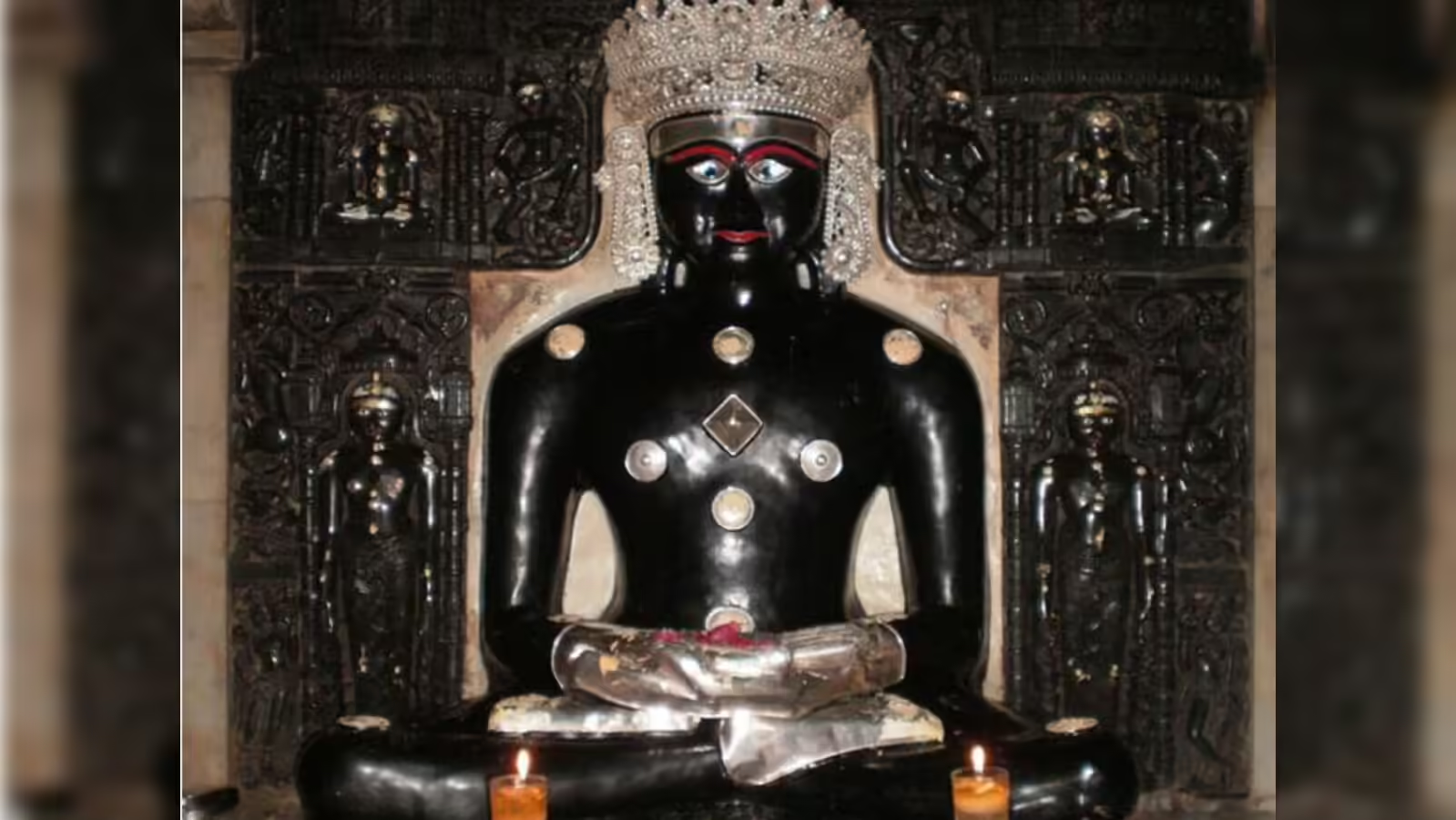
A serene depiction of Lord Neminath Bhagwan — Jain Tirthankara — Arishtanemi
An Introduction

A Prince Who Heard the Cries of the Voiceless.

Born in the ancient kingdom of Sauripura to King Samudravijaya and Queen Shivadevi of the illustrious Yadu dynasty, Prince Nemikumar — later revered as Neminath Bhagwan — walked the corridors of palace life in the same era as his cousins Krishna and Balarama.

Yet on the very threshold of his royal wedding, the cries of animals confined for the marriage feast pierced his soul. In that singular moment, the prince renounced kingdom, crown and bride — to walk the long, luminous road toward omniscience.

His life is the original parable of compassion choosing over comfort, of silence speaking louder than ceremony, of renunciation as the highest royalty.

— The 22nd Tirthankara of this Avasarpini era.
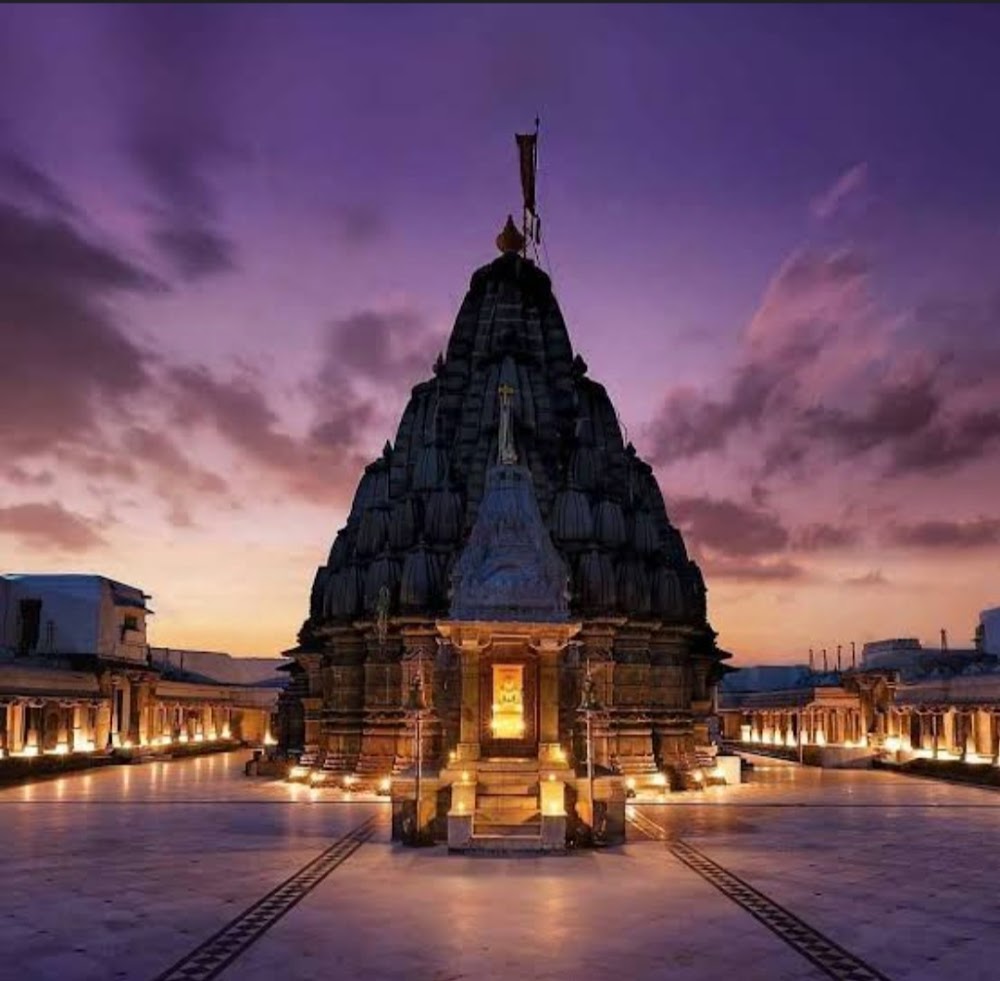
Mount Girnar — site of Neminath Bhagwan's renunciation, omniscience and nirvana
Mount Girnar · Saurashtra

Where Renunciation Became Light.

Four Pillars

The Inner Architecture of His Teaching.

Neminath's discourse rests on four interlocking principles — luminous, demanding, and entirely contemporary. They are not relics; they are instructions for a life of meaning.

01 — Ahimsa

Non-violence in Thought, Word & Deed

The first vow. Reverence extended not only to humans but to every stirring life — visible and unseen.

02 — Karuna

Compassion as a Daily Practice

Empathy refined into action. To feel another's suffering as one's own, then to relieve it without applause.

03 — Vairagya

Detachment From the Material

Possessing things without being possessed by them. A serene independence from outcomes.

04 — Moksha

Liberation Through Self-Realization

The soul restored to its native purity — beyond karma, beyond becoming, beyond the wheel.

05 — Satya

Truth as the Ground of Being

Speaking what is right and not merely what is convenient — even when truth costs us our pleasures.

06 — Aparigraha

Non-Possession & Inner Spaciousness

The freedom of carrying nothing one cannot easily set down. Minimalism long before it had a name.

Lord Neminath turning the chariot back from his wedding upon hearing the cries of animals — The Turning Point
The Wedding That Never Was

A Chariot Turned.
A Soul Awakened.

The wedding procession glittered through the streets — drums, garlands, the bridal palaces of Princess Rajimati waiting at Junagadh. Then, mid-route, Prince Neminath halted his chariot.

From the kitchens nearby came a sound the world had taught itself to ignore: the trembling cries of animals readied for the wedding feast. He asked. He was told. He turned the chariot — not in anger, but in clarity. "If joy requires another's grief, it is not joy."

That single act of moral courage became one of the great hinges of Indic spiritual memory — the moment the future Tirthankara stepped beyond palace walls into the forests of Mount Raivataka, never to return as a prince.
All souls are equal — none should be harmed, oppressed or enslaved. Reverence for life is not one virtue among many; it is the root of every virtue.
— Attributed to the discourses of Lord Neminath
Explore

Walk the Story.

A digital pilgrimage through eight chapters — from royal childhood and renunciation, through the Krishna kinship, to the symbolism, the iconography and the modern relevance of his vow.

Shauripuri — birthplace and Kalyanak bhumi of Neminath Bhagwan
Begin

Step into the Story.

Explore the Life of Neminath